
Once you know you are moving, one of the first things to figure out is…
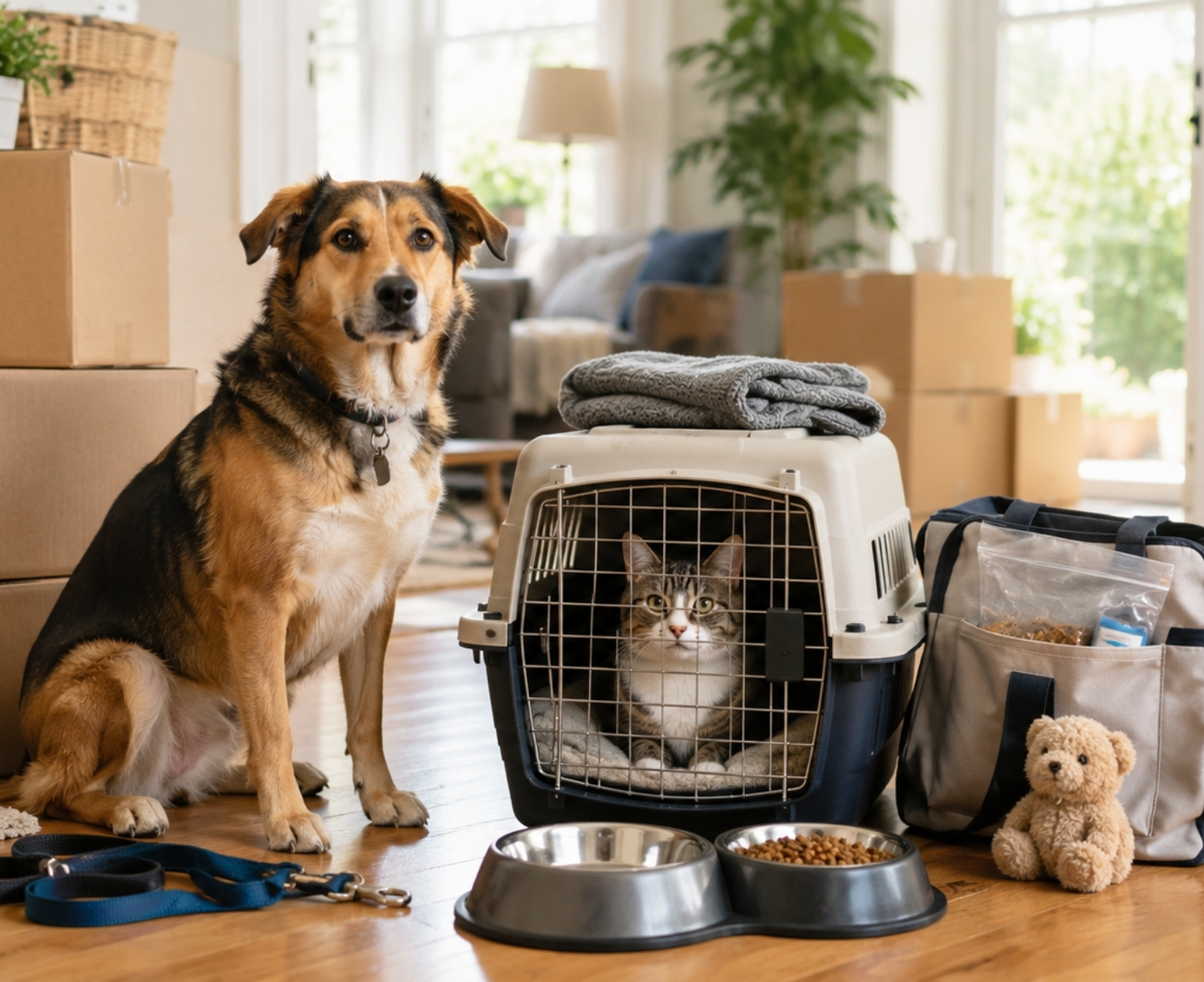
Moving With Pets: How to Reduce Stress and Prevent Escapes
Moving day can be confusing for pets. Familiar furniture disappears, strangers enter the home, doors remain open, and the household routine changes almost overnight. Even an animal that is normally calm may become anxious, hide, attempt to escape, or behave differently during a move.
A little preparation can make the transition safer for everyone. When moving with pets, the goal is to keep them away from moving-day activity, maintain as much of their normal routine as possible, and introduce the new home gradually.
Use this guide to prepare your dog, cat, or other companion animal before, during, and after your move.
Start Preparing Your Pet Before Moving Day
Do not wait until the moving crew arrives to decide where your pet will stay or how it will travel.
Several weeks before the move, begin making a basic plan that includes:
- Where your pet will stay during packing and loading
- Who will be responsible for the pet
- How the pet will travel
- Which supplies need to remain accessible
- Whether veterinary records need to be transferred
- How you will prevent escapes at both homes
- Where food, medication, carriers, and leashes will be packed
Schedule any veterinary appointments early, especially when moving a long distance or crossing state lines. Ask for copies of vaccination records, prescriptions, and other important health information.
Do not give a pet a sedative or unfamiliar medication without first speaking with a veterinarian. Your veterinarian can provide guidance when a pet experiences severe travel anxiety, motion sickness, or another health concern.
Update Identification Before the Move
Current identification can make it easier to reunite with a pet that escapes during the moving process.
Before moving day:
- Confirm that your pet wears a secure collar
- Add an identification tag with your current phone number
- Update the address and contact information associated with the microchip
- Keep a recent photograph of your pet on your phone
- Save veterinary and microchip information somewhere accessible
- Check that carriers, harnesses, and leashes are in good condition
Use a phone number that will remain active during and after the move. An old address on a tag is less important than having a reliable number where you can be reached immediately.
For pets that do not typically wear collars indoors, consider introducing one before the move rather than waiting until moving day.
Keep Packing as Calm and Predictable as Possible
Pets may become unsettled when boxes begin filling rooms and furniture starts disappearing. Packing gradually can make the changes feel less abrupt.
Try to:
- Pack one room at a time
- Keep food and water in their normal locations as long as possible
- Maintain regular walks, feeding times, and play sessions
- Leave a favorite bed, blanket, or toy unpacked
- Avoid stacking boxes around litter boxes or feeding areas
- Keep packing materials away from curious pets
Tape, plastic wrap, box cutters, cords, and packing materials can present hazards. Store them securely when they are not being used.
Four Guys and a Truck offers professional packing services for customers who want to reduce the amount of work required before moving day. Even when movers handle the packing, keep your pet’s immediate supplies separate and clearly marked.
Choose a Safe Place for Your Pet on Moving Day
The safest place for a pet is usually away from open doors, moving equipment, unfamiliar people, and heavy foot traffic.
Consider arranging for your pet to stay with:
- A trusted friend or family member
- A familiar pet sitter
- A reputable boarding facility
- A veterinarian that offers day boarding
This is often the simplest way to reduce stress and prevent an escape.
When off-site care is not possible, place your pet in a secure room that has already been cleared of furniture and boxes. A bathroom, bedroom, or other quiet space may work.
The room should contain:
- Food and water
- A bed or familiar blanket
- A litter box for cats
- Favorite toys
- Necessary medication
- A secure carrier
- Comfortable ventilation and temperature
Place a large sign on the closed door stating that a pet is inside and the door must remain shut. Tell the moving crew and every household member where the pet is located.
Check on the animal regularly, but do not repeatedly open the door while movers are passing through the area.
Assign One Person to Be Responsible for the Pet
During a busy move, it is easy for everyone to assume that someone else is watching the dog or checking on the cat.
Choose one responsible adult to manage:
- Feeding and water
- Walks and bathroom breaks
- Medication
- Carrier security
- Transportation
- Arrival at the new home
- The final safety check
This person should not also be responsible for directing every aspect of the move. Pet supervision requires consistent attention, particularly when doors, garages, gates, and vehicles are being opened.
Pack a Separate Pet Essentials Bag
Do not place your pet’s immediate supplies deep inside the moving truck. Pack a bag or plastic bin that remains with you.
Include:
- Food for several days
- Bottled water
- Food and water bowls
- Medication
- Veterinary records
- Leash and harness
- Carrier
- Waste bags
- Litter and a litter box
- Bedding
- Towels
- Favorite toys
- Treats
- Cleaning supplies
- Paper towels
- A recent photograph
- Microchip and identification information
Bring more food and medication than you expect to need in case travel or unpacking takes longer than planned.
The pet bag can be packed alongside your household’s first-night essentials. Review our packing services for additional help preparing the rest of your belongings.
Transport Pets in Your Personal Vehicle
Pets should travel with you or another trusted person, not inside the moving truck.
Use an appropriate carrier, crate, harness, or vehicle restraint. Before departure:
- Confirm that the carrier closes securely
- Attach identification to the carrier
- Place a familiar blanket inside
- Check the vehicle temperature
- Secure loose supplies
- Bring water and cleaning materials
- Plan appropriate stops
- Keep doors and windows closed before opening the carrier
Do not allow a loose pet to exit the vehicle at a rest stop or unfamiliar location. Dogs should be securely leashed before a vehicle door opens. Cats and small animals should remain inside closed carriers unless they are in a fully enclosed and secure space.
Customers planning a longer relocation can review our long-distance moving services for information about household transportation and preparation.
How to Prevent Escapes at the New Home
The new property may contain hazards that are not immediately obvious. Before allowing a pet to explore, inspect the home carefully.
Check for:
- Open exterior doors
- Loose window screens
- Damaged fences
- Gaps beneath gates
- Unlatched basement or garage doors
- Holes behind appliances
- Open vents or crawl spaces
- Cleaning chemicals
- Pest-control products
- Exposed wires
- Nails, tools, or packing materials
- Toxic plants
- Leftover food or trash
Confirm that every family member and mover knows the pet is present.
Keep dogs leashed when first entering the property, even when the yard appears fenced. Cats should remain in a carrier until they are inside a closed, secure room.
Introduce the New Home Gradually
Giving a pet immediate access to the entire home can be overwhelming. Start with one quiet room containing familiar scents and belongings.
Set up:
- The usual bed or blanket
- Food and water
- A litter box
- Familiar toys
- A scratching post for cats
- A crate when the pet is already comfortable using one
Allow the pet to settle before opening additional rooms. Some animals may begin exploring quickly, while others may need more time.
Keep exterior doors and windows secure throughout this adjustment period. A frightened cat may hide, while an anxious dog may attempt to return to familiar surroundings.
Maintain Familiar Routines
Moving changes the environment, but meals, walks, play, and bedtime can remain relatively predictable.
Try to maintain:
- Regular feeding times
- Normal portion sizes
- Familiar walking schedules
- Usual commands and household rules
- Daily play or exercise
- The pet’s normal sleeping arrangement
Avoid introducing too many changes at once. Moving week is usually not the best time to switch food, replace a familiar bed, or establish an entirely new routine unless necessary.
Moving With Dogs
Dogs may be especially interested in moving crews, open doors, and activity outside the home.
To keep a dog safe:
- Use a leash during arrivals and departures
- Check the collar or harness fit
- Keep the dog away from moving paths
- Inspect the new yard before allowing off-leash access
- Walk the neighborhood on a leash
- Introduce new rooms gradually
- Watch for damaged gates or low fence sections
- Maintain exercise and bathroom schedules
Do not rely solely on an electronic fence at an unfamiliar property. The dog needs time to learn the new environment and boundaries.
Moving With Cats
Cats may hide when their environment changes. Check boxes, closets, cabinets, furniture, and quiet corners before closing rooms or loading the truck.
Helpful precautions include:
- Keeping the cat in a secure room during loading
- Transporting the cat in a closed carrier
- Covering part of the carrier with a light towel when appropriate
- Setting up one quiet room at the new home
- Placing the litter box in an accessible location
- Checking screens and windows
- Keeping the cat indoors during the adjustment period
- Avoiding forced interaction
Before movers leave the old home, confirm that the cat is accounted for. Never assume it is still in the designated room without checking.
Moving With Small Animals, Birds, and Fish
Rabbits, guinea pigs, birds, reptiles, and fish require species-specific planning. Temperature, travel time, enclosure security, noise, and access to water may all affect transportation.
For small animals and birds:
- Use a secure travel enclosure
- Keep the carrier out of direct sunlight
- Protect the animal from extreme temperatures
- Bring familiar bedding when safe
- Avoid placing the carrier near loud speakers or unstable objects
- Keep food and care supplies accessible
Aquariums require additional preparation because tanks generally should not be moved while filled. Ask a qualified aquarium professional for guidance on safely transporting fish, water, filters, and tank equipment.
Watch for Signs That Your Pet Is Struggling
Temporary nervousness can be expected, but significant or persistent changes may require professional guidance.
Contact your veterinarian when you notice concerning behavior or symptoms such as:
- Refusing food or water
- Repeated vomiting or diarrhea
- Breathing difficulties
- Extreme lethargy
- Persistent shaking
- Difficulty urinating
- Injuries
- Severe aggression
- Prolonged hiding accompanied by other symptoms
- Unusual behavior that does not improve
Do not assume every change is simply moving stress. Health problems can occur at the same time as a relocation.
Prepare the Home Before the Moving Crew Arrives
The more organized the move, the easier it is to maintain a secure area for pets.
Before moving day:
- Finish as much packing as possible.
- Label boxes by destination room.
- Clear hallways, stairs, and entrances.
- Decide where your pet will stay.
- Tell the movers about the pet.
- Secure fences, screens, gates, and doors.
- Pack the pet essentials bag.
- Place carriers and leashes where they are easy to reach.
- Confirm transportation arrangements.
- Keep veterinary contact information accessible.
Four Guys and a Truck provides residential moving services and local moving services throughout Western Massachusetts. Planning the household move in advance can reduce last-minute activity and make it easier to keep animals safely separated from the work.
Make Moving With Pets Safer and Less Stressful
A successful move begins with controlling access to doors, assigning one person to supervise the pet, and keeping familiar supplies nearby. Prepare identification in advance, transport animals securely, and inspect the new home before allowing them to explore.
With planning and patience, moving with pets can be safer and more manageable for both the animals and the people caring for them.
Contact Four Guys and a Truck to request a free moving estimate for your upcoming relocation in Western Massachusetts.

Related Posts


