
Once you know you are moving, one of the first things to figure out is…
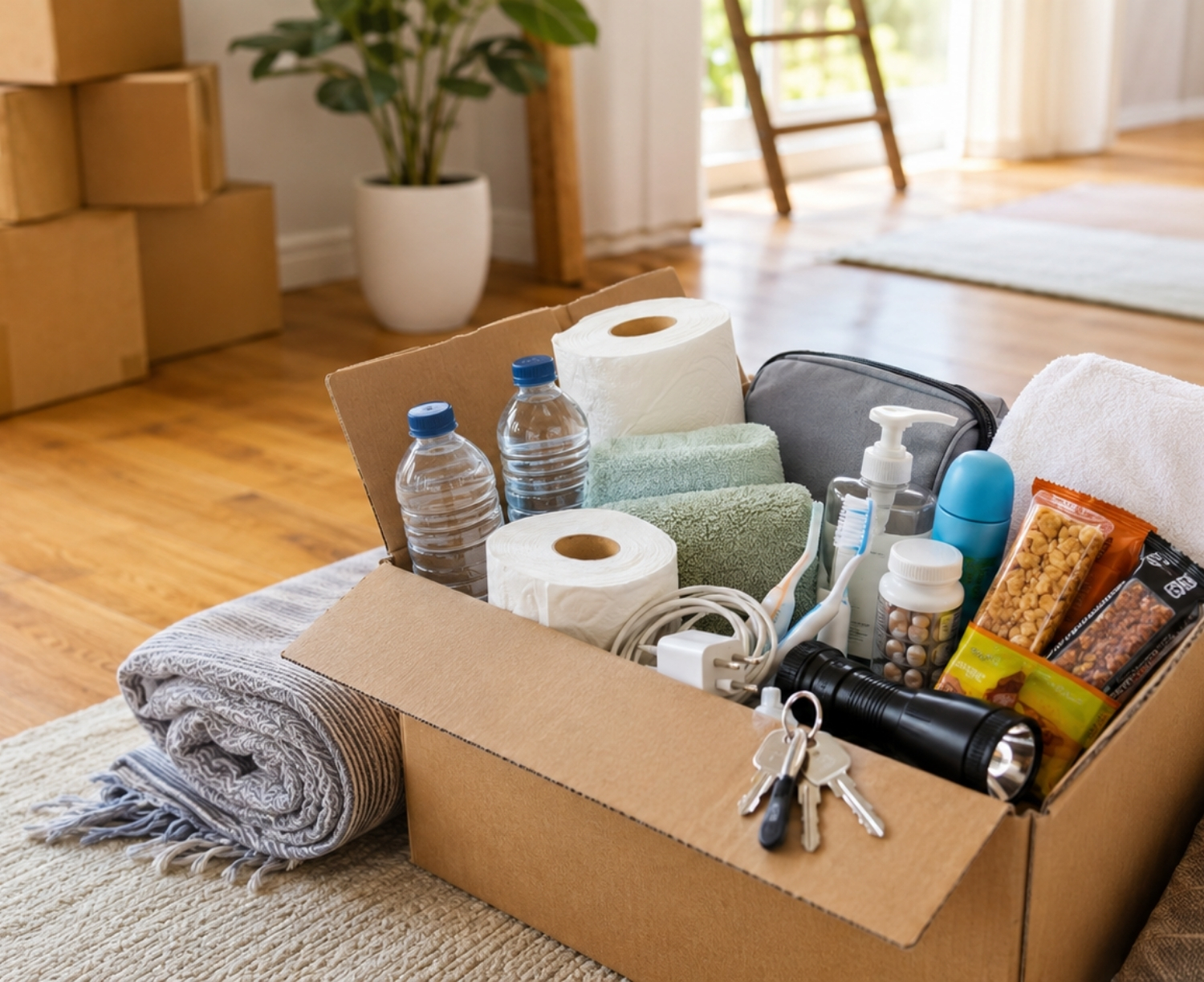
The First-Night Box: 30 Things You Will Want Immediately After Moving
After a long moving day, the last thing you want to do is open ten boxes looking for a phone charger, clean towel, or roll of toilet paper.
That is where a first-night box comes in. Also called an “open first” box, it contains the everyday items you will need before the rest of your home is unpacked. A practical moving essentials checklist can make your first evening more comfortable and prevent important belongings from becoming buried in the moving truck.
Your essentials do not necessarily need to fit into one box. Depending on the size of your household, you may need a suitcase, bathroom bin, kitchen box, and separate bag for children or pets. The important part is keeping these items clearly labeled, easy to reach, and separate from everything else.
What Is a First-Night Moving Box?
A first-night box contains the necessities you will need during the first 24 to 48 hours in your new home.
Think about what you normally use between getting home in the evening and leaving the next morning. You will probably need toiletries, medication, bedding, clothing, food, basic cleaning products, and electronic chargers.
The box should travel with you whenever possible rather than being loaded deep inside the moving truck. Mark it clearly on every side with wording such as:
- Open First
- First Night
- Essentials
- Do Not Load
- Keep With Us
Four Guys and a Truck offers professional packing services for customers who need help preparing household belongings, furniture, and fragile items. Your personal essentials, however, should remain under your control throughout the move.
Your Moving Essentials Checklist
Use this list as a starting point and adjust it for your family, destination, health needs, and expected schedule.
Bathroom and Personal Care Essentials
1. Toilet paper
Do not assume the previous resident left a roll behind. Pack at least one roll for each bathroom you expect to use.
2. Hand soap
Place a bottle at the main bathroom or kitchen sink as soon as you arrive.
3. Toothbrushes and toothpaste
Keep everyone’s dental supplies together in a clearly marked toiletry bag.
4. Towels and washcloths
Pack at least one bath towel and washcloth for each person, along with a hand towel for the bathroom.
5. Shower supplies
Include shampoo, conditioner, body wash, and any other products you use daily. A shower curtain and hooks may also be necessary if the new bathroom does not have a shower door.
6. Medication
Keep prescription medication, over-the-counter medicine, medical devices, and written dosage information with you. Do not place essential medication on the moving truck.
7. Basic first-aid supplies
Pack adhesive bandages, antiseptic wipes, pain relievers, gauze, and any other basic supplies your household may need.
Clothing and Bedding
8. A change of clothes
Pack clothing for the first night and following day. Add extra outfits when weather, closing schedules, or delivery timing could cause delays.
9. Sleepwear
Keep pajamas or other comfortable clothing separate from your packed dresser and closet contents.
10. Bedding
Include sheets, pillowcases, blankets, and comforters for every bed that will be used on the first night.
11. Pillows
Pillows are easy to pack in a large truck and surprisingly inconvenient to locate after a tiring move. Keep them with the first-night supplies.
12. Seasonal clothing
Pack jackets, rain gear, boots, gloves, or other weather-appropriate items. Western Massachusetts weather can change quickly, especially during spring, fall, and winter moves.
Four Guys and a Truck provides residential moving services throughout Western Massachusetts, including furniture protection, loading, transportation, and unloading.
Food and Kitchen Basics
13. Bottled water
Moving involves hours of physical activity. Keep enough water available for your household throughout the day.
14. Easy meals and snacks
Choose foods that require little or no preparation, such as granola bars, fruit, sandwiches, crackers, or takeout. Confirm which nearby restaurants and stores will be open when you arrive.
15. Paper plates and disposable utensils
These allow you to eat without immediately unpacking dishes and silverware. Reusable camping dishes can serve the same purpose.
16. Cups or reusable water bottles
Pack enough for each person rather than relying solely on disposable bottles.
17. Coffee or tea supplies
Coffee drinkers may want to keep a coffee maker, filters, mugs, and coffee grounds accessible. Tea drinkers should pack a kettle or another way to heat water.
18. A multipurpose kitchen tool
A bottle opener, can opener, and basic knife can solve several first-night problems. Transport sharp items safely in a protective cover.
19. Pet food and bowls
Keep enough food, water, treats, and medication available for several days. A familiar bowl or blanket may also help a pet adjust to the new environment.
Electronics and Important Information
20. Phone chargers
Keep chargers in a personal bag rather than packing them with general electronics. A portable battery pack can also be useful.
21. Laptop and necessary work equipment
Employees working remotely may need a laptop, charger, headset, mouse, and essential files before the home office is fully unpacked.
22. Power strip or extension cord
The nearest electrical outlet may not be where you need it. A small power strip allows several essential devices to be charged at once.
23. Internet and utility information
Keep account numbers, appointment confirmations, router instructions, and contact information for utility providers accessible.
24. Important documents
Carry identification, closing paperwork, leases, moving estimates, insurance information, financial records, and other essential documents yourself.
Do not place irreplaceable paperwork, jewelry, cash, medication, keys, or personal electronics in a box that may be difficult to access.
Cleaning and Household Supplies
25. Paper towels and cleaning wipes
Even a professionally cleaned home may need a quick wipe-down before boxes and furniture are placed.
26. Trash bags
Trash bags are useful for packing material, food waste, dirty clothing, and last-minute cleanup. They can also serve as temporary liners for uncovered bins.
27. Basic cleaning products
Pack a multipurpose cleaner, disinfectant, sponge, dish soap, and a few cleaning cloths. Avoid placing leaking or hazardous cleaning products inside an ordinary moving box.
28. Basic toolkit
A screwdriver, adjustable wrench, hammer, utility knife, measuring tape, scissors, and pliers can help with simple furniture setup and minor adjustments.
Keep sharp tools safely enclosed and away from children.
29. Flashlight
A flashlight is useful when a room lacks working fixtures, the utility service is delayed, or you need to inspect a basement, attic, garage, or exterior area.
30. Keys and access items
Keep house keys, vehicle keys, garage door openers, building access cards, alarm codes, and storage-unit keys together. Decide which adult will remain responsible for them during the move.
Essentials for Children and Pets
Families may need additional items beyond the main moving essentials checklist.
For young children, consider packing:
- Diapers and wipes
- Formula, bottles, or baby food
- A favorite blanket or stuffed animal
- Nightlights
- School supplies
- Books, games, or tablets
- Childproofing supplies
- Necessary medications
For pets, consider:
- Leashes and carriers
- Waste bags or litter supplies
- Bedding
- Favorite toys
- Veterinary information
- Identification tags
- Medications
- Cleaning supplies for accidents
Keep children and pets in a secure area away from open doors, moving equipment, and heavily traveled walkways.
How to Pack and Label the First-Night Box
A well-stocked essentials box is not useful when it is buried behind furniture.
Use these steps:
- Choose a durable box, plastic bin, suitcase, or overnight bag.
- Place liquids in sealed plastic bags to prevent leaks.
- Clearly label the container on the top and every side.
- Use bright tape or a distinct label color.
- Tell the moving crew that the container should not be loaded.
- Keep it in your personal vehicle or place it at the very end of the truck.
- Assign one person to remain responsible for it.
Customers using a rental truck or portable container can hire Four Guys and a Truck for professional loading and unloading services. Clearly identify anything you need to access immediately so it can be positioned appropriately.
Pack a Separate Moving-Day Bag
Your first-night box may remain at the new home while you travel between properties, attend a closing, pick up keys, or manage other moving-day responsibilities. Keep a smaller personal bag with you at all times.
This bag should contain:
- Wallet and identification
- Phone and charger
- Keys
- Medication
- Moving paperwork
- Water
- Snacks
- Basic toiletries
- A change of clothes
- Valuables
Treat it like an airline carry-on. It should contain anything you cannot comfortably go without if the moving schedule changes.
What Not to Put in the First-Night Box
Avoid adding so much that the container becomes heavy, disorganized, or difficult to carry.
Leave out:
- Decorative items
- Books you do not immediately need
- Extra kitchenware
- Large quantities of clothing
- Duplicate toiletries
- Nonessential electronics
- Items intended for long-term storage
- Hazardous or flammable products
The goal is not to unpack your entire home from one container. It is to cover your most immediate needs until you can begin opening the rest of the boxes.
Prepare the New Home Before Unpacking
Before the moving crew begins placing furniture and boxes, check that the property is ready.
Confirm that:
- Utilities are active
- Entrances are unlocked
- Walkways are clear
- Rooms are labeled
- Bathrooms have basic supplies
- The refrigerator is operating
- Children and pets have a secure area
- Major furniture locations have been decided
- Cleaning products are accessible
A basic floor plan can help the movers place furniture in the correct rooms the first time. This reduces unnecessary rearranging after a long day.
Review the company’s moving FAQs for additional guidance on estimates, scheduling, packing, prohibited items, and moving-day preparation.
Make Your First Night in the New Home Easier
The first evening after a move may still include boxes, unfinished rooms, and a lengthy to-do list. It should not involve searching for medication, sleeping without sheets, or discovering that every phone charger is packed at the bottom of the truck.
Using a moving essentials checklist helps you protect important belongings and maintain a basic level of comfort while the rest of the home is being organized.
Four Guys and a Truck provides residential, local, long-distance, packing, furniture moving, storage, and loading services throughout Western Massachusetts. Contact Four Guys and a Truck to request a free estimate and prepare for a more organized moving day.

Related Posts


