
Once you know you are moving, one of the first things to figure out is…
The Antique Care Guide: Moving Heavy and Precious Furniture Through Historic New England Homes
The Pioneer Valley is celebrated for its incredible historic architecture. From the sweeping Federal-style estates in Hadley to the stately Victorian homes lining the streets of Northampton and Amherst, these properties offer unmatched character, craftsmanship, and charm.
However, if you own one of these beautiful historic homes—and a collection of heavy, precious antique furniture to match—moving day can quickly turn from an exciting transition into a nerve-wracking ordeal.
Historic New England homes were constructed long before modern, oversized furniture existed. Their steep, narrow stairwells, low ceilings, tight doorways, and sharp angles (often referred to as “coffin turns”) present a unique logistical challenge. Moving a solid oak wardrobe, a delicate grandfather clock, or a priceless family heirloom through these spaces requires far more than brute strength. It demands strategy, patience, and specialized techniques.
To help you protect your investment and your peace of mind, we’ve compiled the ultimate guide to moving precious antiques safely through historic spaces.
The Unique Structural Challenges of Historic Homes
Before lifting a single item, it helps to understand why historic homes are uniquely unforgiving during a relocation. Standard modern homes are designed with wide hallways and open-concept entryways. Older New England architecture, however, was built to trap heat, resulting in tight, partitioned rooms and compact transitional spaces.
- Steep, Narrow Staircases: Older homes often feature stairs with narrow treads and high risers, making balance difficult when carrying heavy loads.
- Winding “Hinder” Turns: Many historic homes feature hallways that turn sharply at 90-degree angles right at the top or bottom of a staircase, leaving zero clearance for long items like sofas or armoires.
- Soft, Aged Woodwork: The historic trim, banisters, and wide-plank pine floors in these homes are irreplaceable. A single scrape from an unprotected piece of furniture can permanently damage the home’s historic integrity.
5 Essential Rules for Moving Antique Furniture Safely
If you are preparing to move high-value or sentimental items, implement these foundational rules to mitigate the risk of structural or cosmetic damage:
1. Strip the Piece Down Entirely
Never attempt to move an antique piece while it is fully assembled. The extra weight causes unnecessary strain on fragile, aged joints.
- Remove Content: Take out all books, linens, or china.
- Detach Hardware: Remove loose shelves, glass panels, drawers, brass handles, and hanging keys. Wrap these components separately in bubble wrap and label them clearly.
- Secure Doors: If doors cannot be removed safely, lock them shut or use non-residue structural bands to ensure they don’t swing open mid-transit.
2. Wrap, Don’t Tape (Protecting the Finish)
The aged varnish, shellac, or wax finish on an antique is incredibly sensitive.
- The Tape Trap: Never apply packing tape, duct tape, or stretch wrap directly to bare wood. The adhesive can strip away centuries-old finishes, and plastic wrap can trap moisture, causing the wood to warp or cloud.
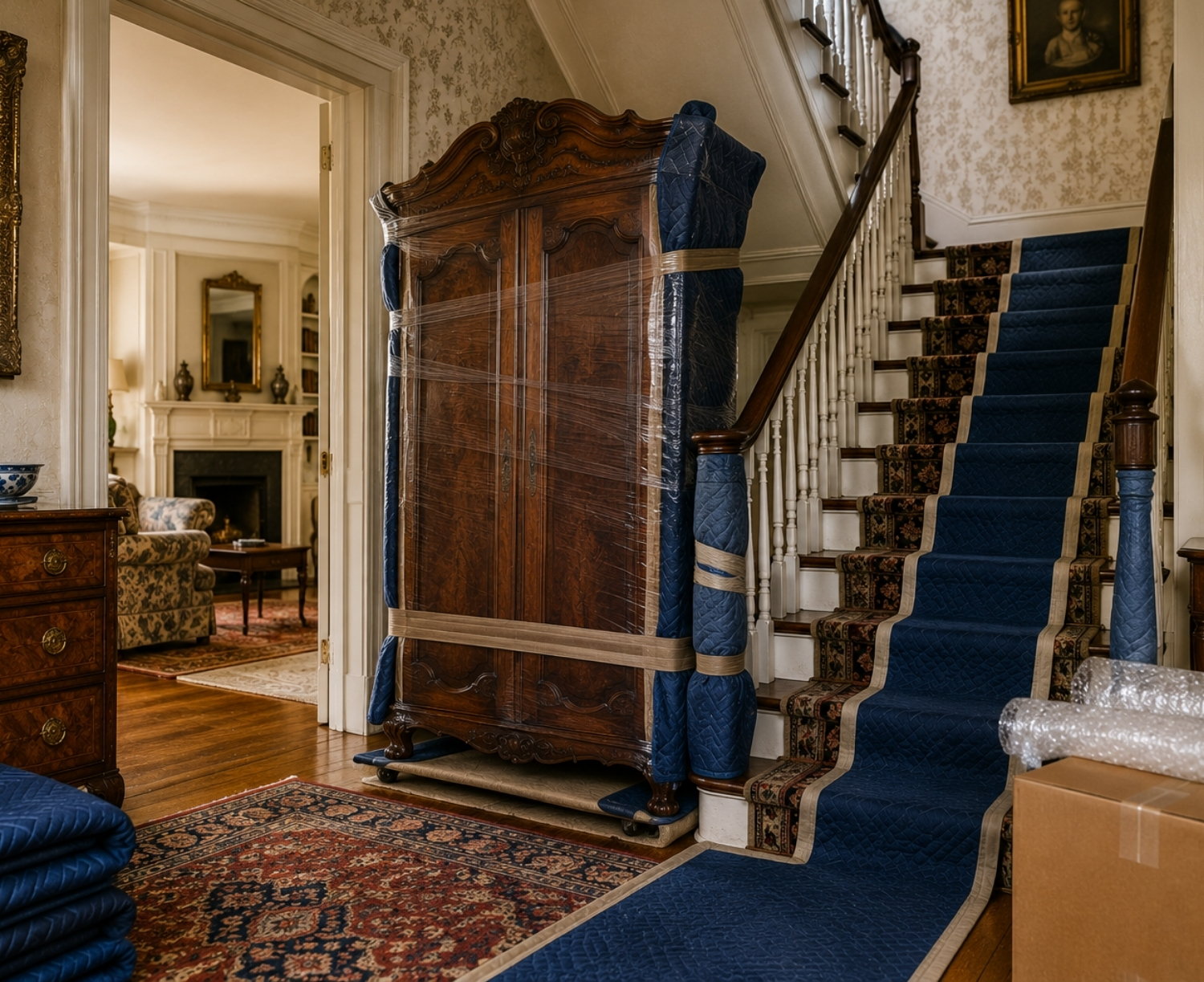
- The Proper Method: Wrap the item completely in thick, clean moving blankets first. Once the wood is fully shielded, use stretch plastic wrap around the outside of the blankets to hold them securely in place.
3. Measure the Path (Twice)
In a historic home, guessing is a recipe for disaster. You must map out your exact exit path beforehand.
- Measure the height, width, and diagonal clearance of every doorway, hallway, and staircase ceiling.
- Compare those numbers against the dimensions of your largest pieces of furniture.
- If a piece cannot physically clear a tight staircase turn, you may need to look into advanced alternatives like window-hoisting.
4. Lift from the Structural Frame
Antiques should never be lifted by their decorative elements. Avoid carrying tables by their legs, chairs by their armrests, or dressers by their top overhanging lips. These decorative pieces are often attached with localized dowels or ancient glue that can snap under pressure. Always lift from the primary, lowest load-bearing base or structural frame.
5. Shield the Architecture
Protecting the furniture is only half the battle; you must protect the historic home as well.
- Install thick neoprene door jamb protectors over entryways.
- Lay down high-grip floor runners to shield historic wide-plank pine or hardwood floors from dirt and scuffs.
- Wrap banisters and handrails in padded blankets to guard against accidental impacts.
Why You Need Specialized Antique Movers in Massachusetts
When it comes to transporting objects of historical or sentimental value, relying on generic labor or a standard DIY approach is a massive gamble. To ensure your items are handled with the respect they deserve, you need to partner with a specialized antique movers Massachusetts collectors, auction houses, and historical societies trust.
Standard moving crews are trained for speed and volume, which works perfectly for modern boxes and modular furniture. However, specialty antique transport requires a slow, calculated approach. Professional antique handlers understand how wood expands and contracts, how ancient joinery behaves under stress, and how to distribute weight safely across fragile legs and bases.
How Four Guys and a Truck Safeguards Your History
At Four Guys and a Truck, we don’t just bring the muscle—we bring a deep appreciation for the history and craftsmanship of Western Massachusetts. Over the past 15 years, we have earned our reputation as premier antique movers Massachusetts families depend on to navigate the most complex architectural layouts in the Pioneer Valley.
We train our dedicated crews to treat your family history as if it were our own:
- Specialized Rigging and Handling: We utilize custom dollies, heavy-duty shoulder harnesses, and premium padding materials designed specifically for high-value furniture relocation.
- Deep Local Experience: We regularly operate inside historic homes throughout Amherst, Northampton, Deerfield, and beyond. We understand the unique architectural quirks of New England homes and know exactly how to conquer them.
- Tailored Moving Plans: Whether you need full-service residential moving services, delicate furniture moving services, or expert white-glove packing services, we build a customized strategy around your inventory.
Secure Peace of Mind for Your Next Move
Your antiques are more than just wood and fabric; they are historical stories, family milestones, and irreplaceable treasures. Don’t leave their safety to chance on moving day. By utilizing proper padding techniques, mapping out your structural pathways, and hiring the expert antique movers Massachusetts turns to for specialty care, you can ensure your heirlooms transition seamlessly into their next chapter.
Ready to experience a stress-free relocation managed by local professionals?
- Get Organized: Read through our complete archive of professional moving tips to jumpstart your preparation.
- Request a Free Quote: Fill out our secure online contact form to receive a transparent, comprehensive estimate.
- Speak with a Specialist: Call our regional routing office at (413) 596-8442 to discuss the unique structural challenges of your historic home.
Four Guys and a Truck: Professional, Accountable, and Local. Let’s preserve your history together!

Related Posts


